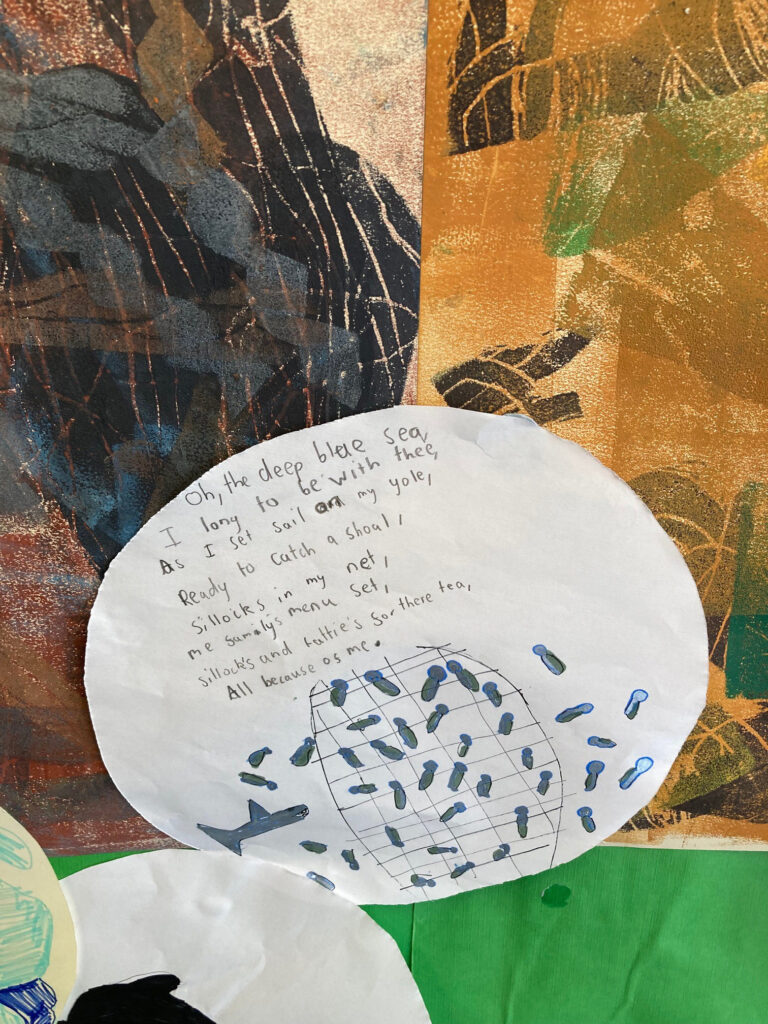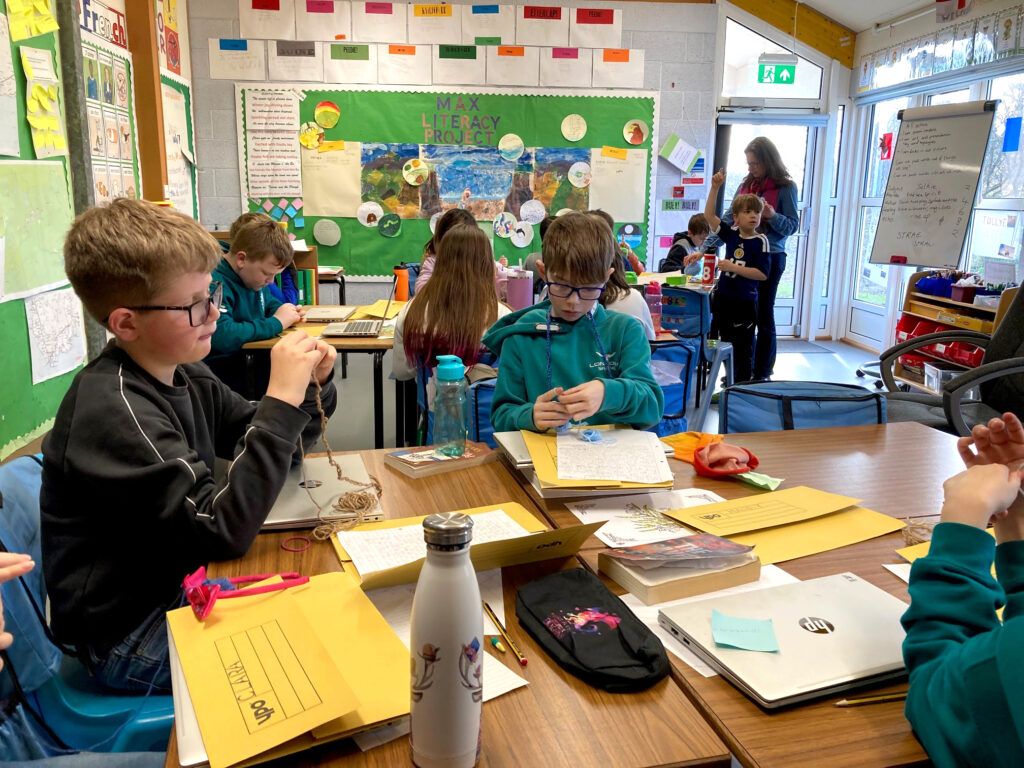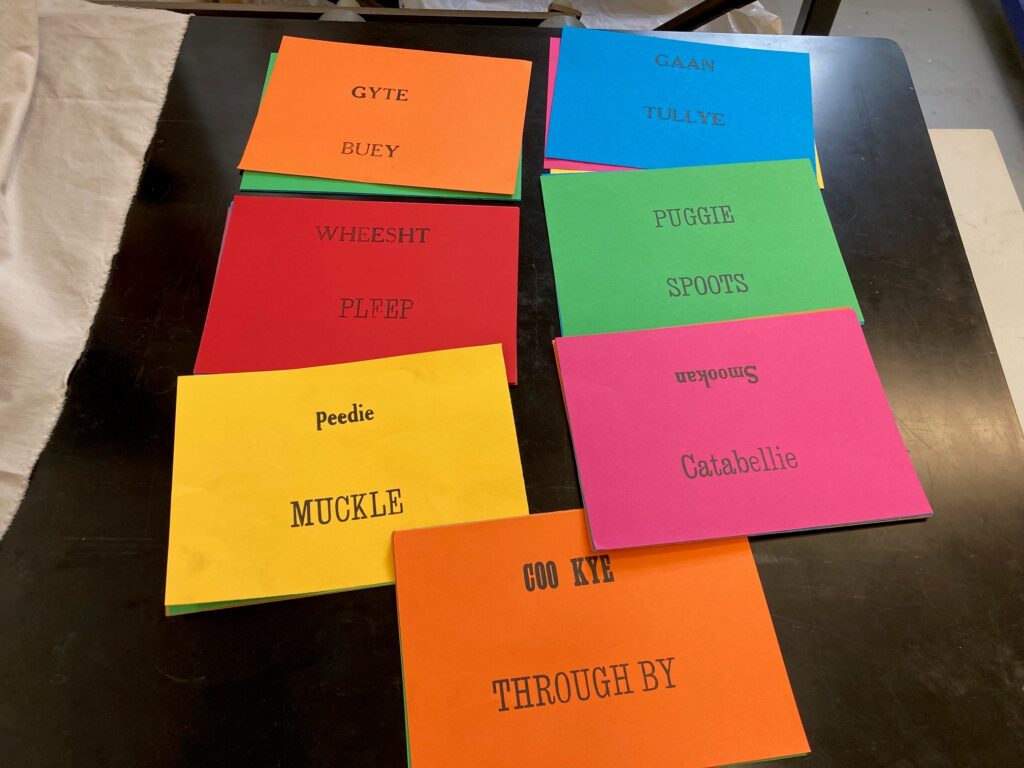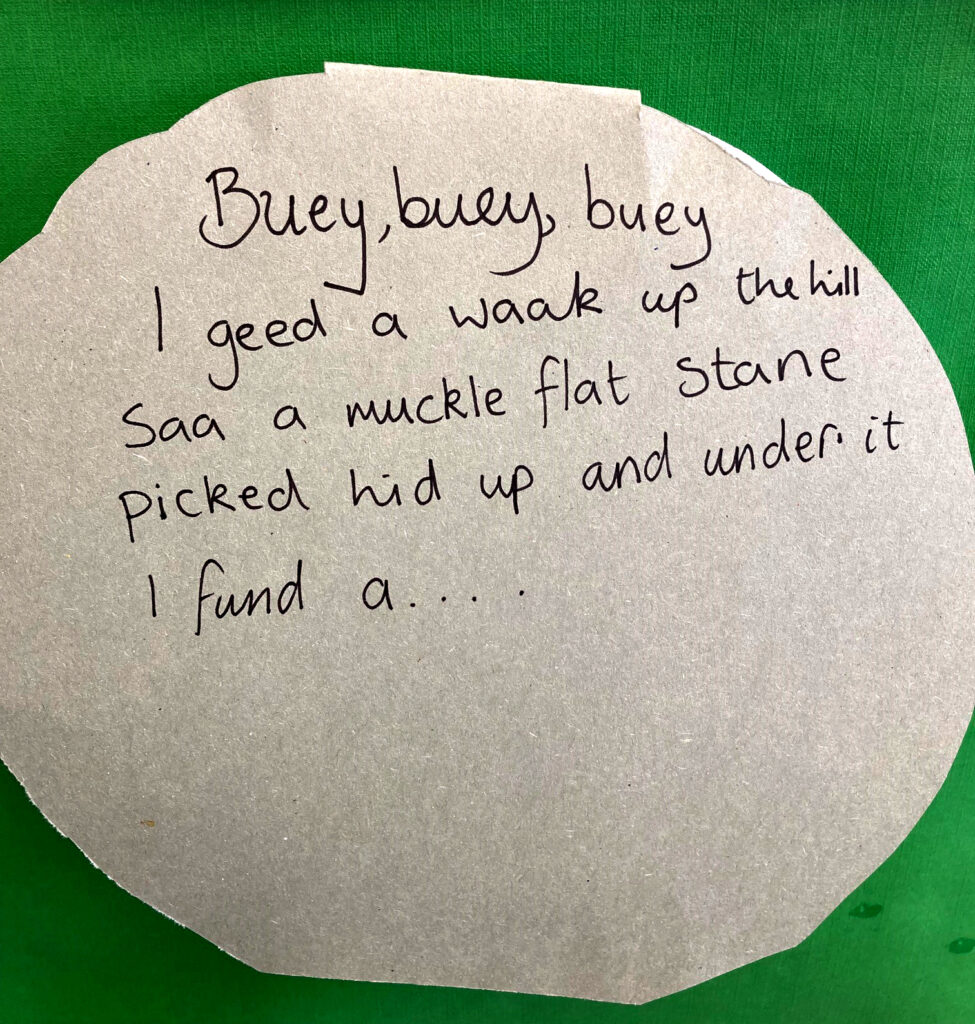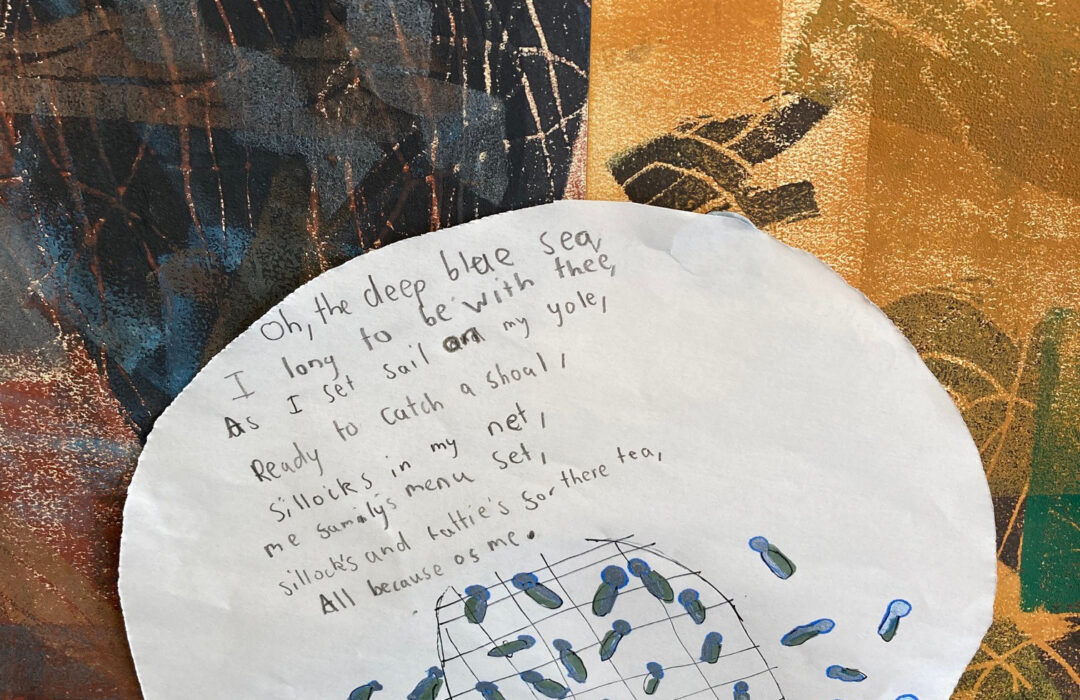
The project was developed in response to a need identified by Orphir Community School to encourage and develop children’s creative writing skills, as well as strengthening their connection with local language and culture. Through exploring Soulisquoy Printmakers’ collection of letterpress and typefaces, the project aimed to provide children with a new and engaging way to experiment with words, particularly those found within Orcadian dialect.
The project recognised the importance of supporting younger generations to value, understand and actively use local dialect in ways that feel relevant to their everyday lives. By combining creative writing, storytelling and visual arts, the project aimed to demonstrate that language is not only something to preserve, but something to use and celebrate.
The project also aimed to build confidence amongst learners with a range of writing abilities, providing opportunities for children to develop ideas, experiment with language and see themselves as creative writers.
The Approach
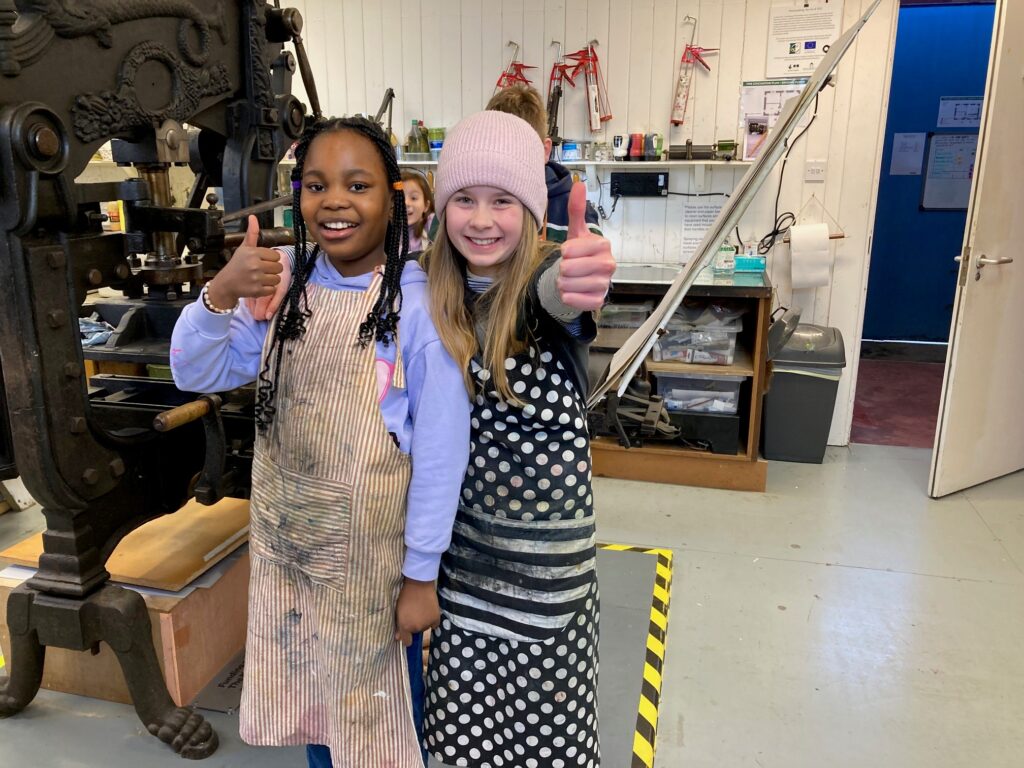
The project took place between February and April 2026 through seven structured, day-long sessions delivered collaboratively by writer Gabrielle Barnby, Soulisquoy Printmakers and Orphir Community School. The programme combined classroom workshops at Orphir Community School with three creative visits to Soulisquoy Printmakers Studio in Stromness, one visit to local gallery the Pier Arts Centre, as well as a visit to Stromness Museum and Kirbister Farm Museum. These experiences enabled children to explore connections between local stories, language, art and place.
Each session began with a short drawing exercise designed to encourage mark-making, visual focus and creative thinking. This was followed by the introduction of an Orcadian dialect poem, which provided inspiration for creative writing activities. Through reading, discussion and exploration of meaning, structure and impact, pupils developed their understanding of language before creating their own stories and poems.
The sessions were carefully structured to support different learning styles, abilities and attention spans. Pupils worked through a series of activities, including focused writing sessions with the writer, printmaking, dialect word research, creation of a word wall and writing a variety of texts. This approach enabled children to work collaboratively while also receiving individual support and space to develop their own ideas.
Reflection was embedded throughout the project. Pupils regularly shared feedback on their learning, responded to questions and took part in peer appraisal, helping them develop ownership of the process and confidence in discussing their creative choices.
A key outcome of this process was the pupils’ desire to share their work with the wider community. They organised a celebration event for their families and local residents, creating displays of their writing and artwork, presenting their work and reading poems and stories aloud. A traditional Orkney supper of farmhouse cheese, bannocks and shortbread was served to bring everyone together. The event celebrated the children’s achievements and strengthened connections between the school, families and local community.
Learning and Impact
The project had a significant impact on children’s confidence as creative writers and communicators. Over the course of the programme, pupils developed their ability to generate ideas, write creatively, revise their work and experiment with Orcadian dialect.
Teachers and facilitators observed a clear progression among learners, from children who were initially reluctant to put pencil to paper becoming proud of producing their own writing, to more confident writers developing greater independence in editing and refining their work.
Children described feeling proud, happy and excited after completing their stories and poems:
“Happy because I got it done and I hadn’t done it before.” Pupil
“Very happy and proud of myself and my fingers are tired.” Pupil
“I’m going to be a famous writer. I love writing stories!” Pupil
The project supported children to recognise themselves as writers and encouraged them to value their own ideas and creativity. Pupils developed new skills in storytelling, poetry, vocabulary development and editing, while also gaining a deeper understanding of Orcadian words and traditions.
Children reflected that:
“I learnt a lot about textures, colours and also moods in my stories.” Pupil
“I’ve learnt it takes thinking and lots of time to think up a good poem, and not to rush it.” Pupil
The project also supported peer learning. Through discussion and feedback, pupils developed skills in overcoming creative challenges and creating supportive spaces for writing.
Reflections from the Project Team
The project was carefully planned and successfully delivered through strong collaboration between Soulisquoy Printmakers, Orphir Community School and the creative team. The clear structure of the sessions provided consistency for pupils, but also flexibility to respond to individual needs and creative opportunities as they emerged.
The combination of writer expertise, excellent teacher support and the specialist environment at Soulisquoy Printmakers created a rich learning experience where children could explore language through both writing and making. The themes that the children were exploring through the sessions with Soulisquoy were also extended and further explored through activities back at school, creating an immersive module of work and fully embedding it as part of the curriculum.
The team reflected that the project benefited from robust planning, strong communication and an approach that anticipated potential challenges. Any individual needs or difficulties that arose were quickly supported through established classroom relationships and the flexible delivery model.
“We were extremely fortunate that we didn’t encounter any real challenge. There is little that we would have changed or done differently” Carol Dunbar, Soulisquoy