The project worked with Year 9 students at King Solomon Academy. The school is located close to The Showroom gallery, in an area of central London experiencing high levels of deprivation, with 70% of students in receipt of free school meals. Many families in the local area experience precarity linked to housing and gentrification. The school supports a diverse student population, with a wide range of educational and additional needs.
The project worked with a group of 15 students, only two of whom spoke English as a first language. Several of the students had additional needs, or were considered at risk of exclusion. For some students, conventional approaches to literacy in the classroom could feel limiting, and creative writing and the arts were viewed by students as having a relatively limited place within the school curriculum.
Say Nothing set out to create a space where students could explore writing through their own experiences, cultures and languages. The project coincided with Angela Ferreira’s Slits are Girls, an exhibition exploring the early emergence of punk in the local area around The Showroom. Drawing on this context, the project used punk’s DIY and resistant ethos to explore poetry, protest and the power of words.
Working with writer Alfiah Jade Brown, students were encouraged to see themselves as writers and to recognise the value of the language and knowledge they already have personally and within their community. Students were given permission to question what is valued within the curriculum and to explore forms of language that might normally be excluded from the classroom.
“We had a structure and a framework which was ‘speak freely and for yourself’” Oliver Herbert, The Showroom
The Approach
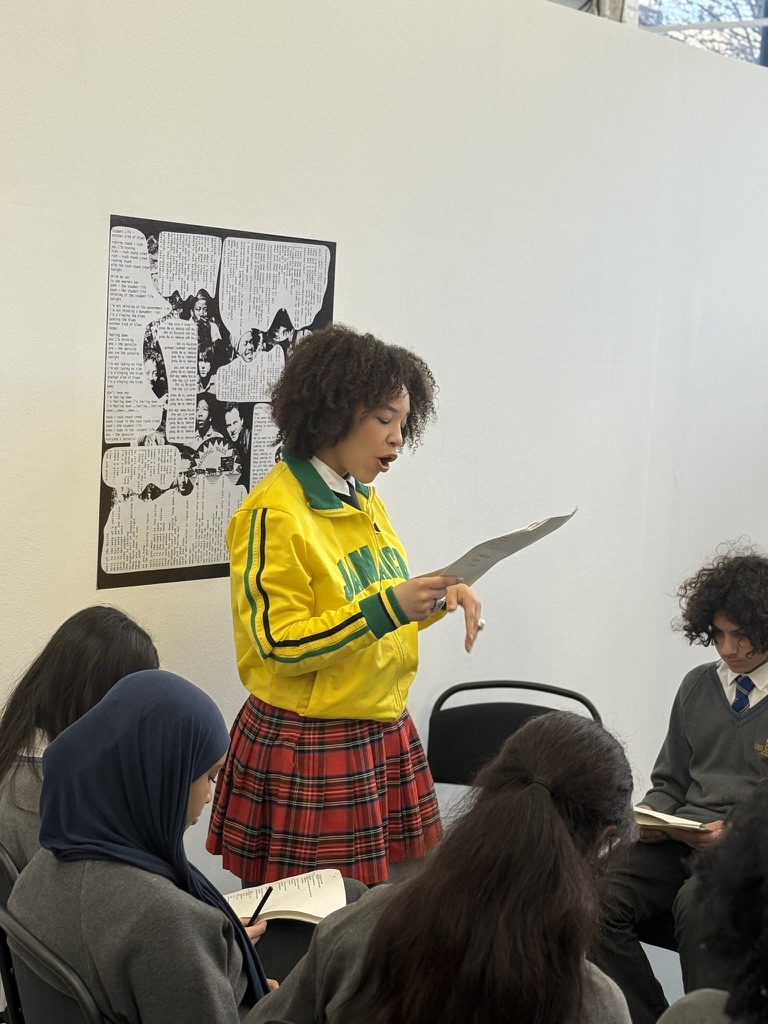
The project took place over eight weeks, combining workshops in the school with creative activity at The Showroom. Working with writer Alfiah Jade Brown, students focussed on a different poet each week. Alfiah performed and discussed their work with the students before inviting them to create their own poems in response. Writers and poets including Caleb Femi, Linton Kwesi Johnson and Mustafa the Poet provided different examples of how language can be used to reflect identity, place and lived experience.
Students explored the idea of punk as a language and a way of challenging established hierarchies, creating space for voices that may otherwise be marginalised. They experimented with different forms of language, including slang, Arabic and English, and considered how words, sounds and cultural references could be brought together in new ways. For many students, this offered a new relationship with language.
The workshops were flexible and responsive to the needs of the group. Some students required additional encouragement or scaffolding before they felt comfortable writing from personal experience or performing. The project team felt it was important to slowly build trust with the group, they created a supportive environment in which students could take risks and speak honestly.
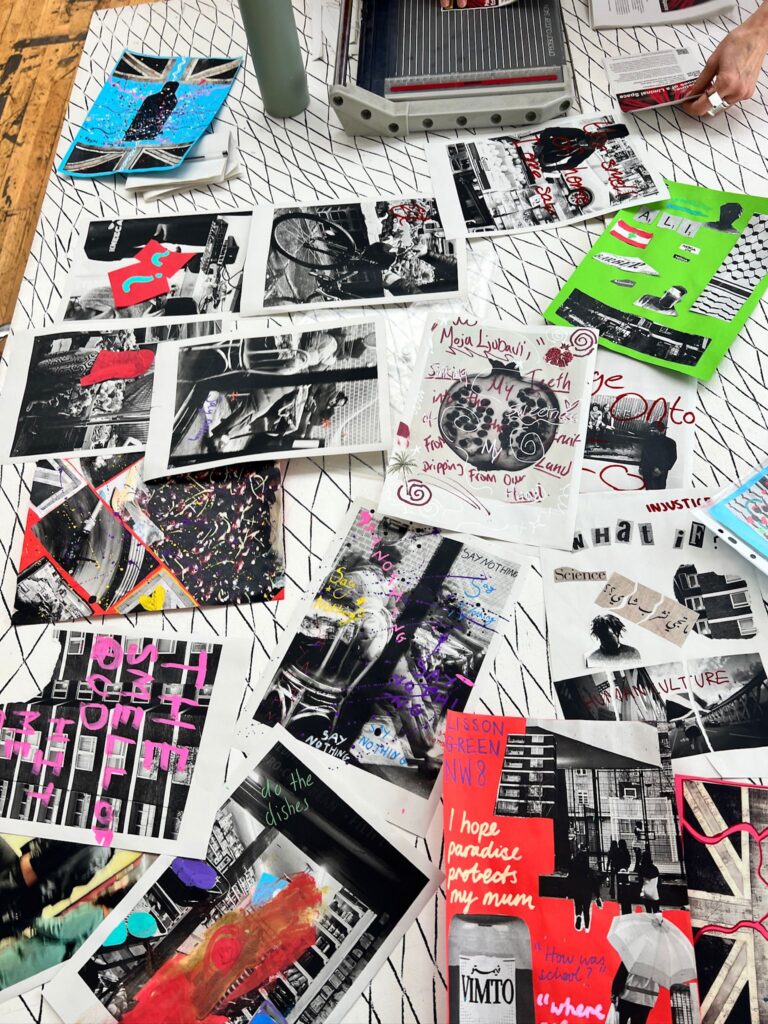
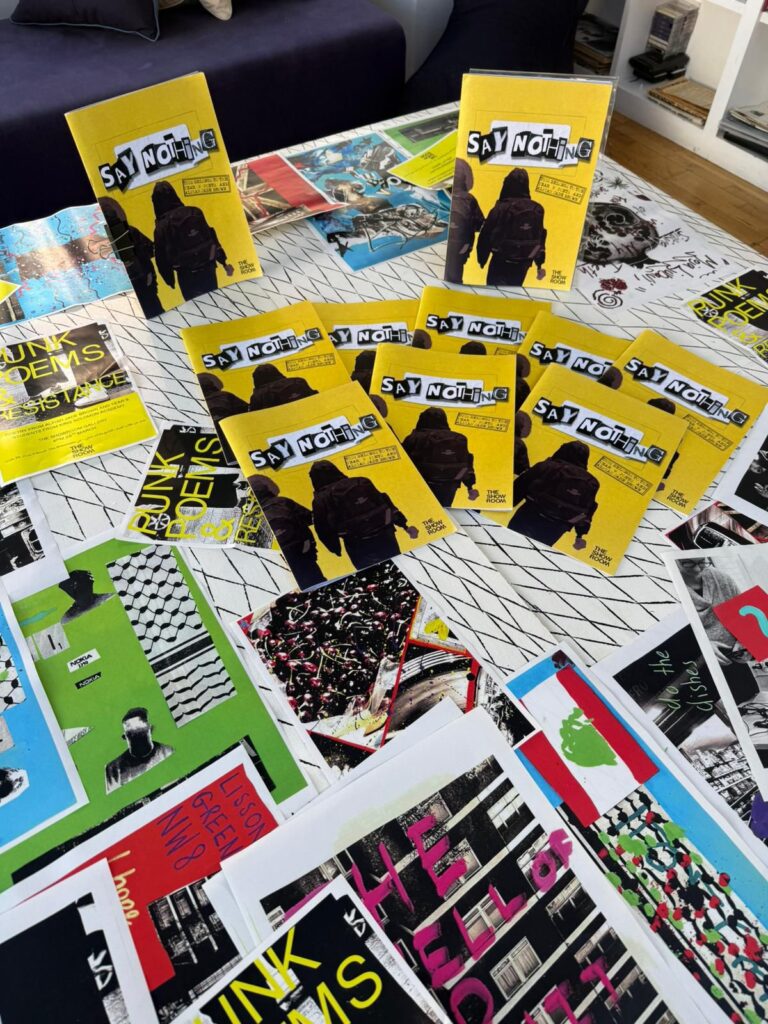
Students also created visual artwork inspired by the aesthetic of punk zines, combining collage, photography and writing. Their poems and artworks were brought together in a publication, creating a lasting public record of the project.
The project culminated in a performance at The Showroom, where students performed their original writing for an audience of families, teachers, community members and local poets. Poets and spoken word artists from Alfiah’s network also attended, enabling students to meet practising writers and see poetry as a live and accessible creative practice.
“The project helped us see that creative writing, when rooted in lived experience, culture, language and contemporary art practice, can create a meaningful bridge between literacy learning and personal development.” Oliver Herbert, The Showroom
Learning and Impact
The project had a significant impact on the young peoples’ confidence and self-expression, particularly for young people who had previously found it difficult to participate in more traditional classroom settings. Teachers observed a significant change in students’ confidence over the eight weeks. Young people who had initially been reluctant to engage with poetry, or speak in front of others later chose to write and share their own original work.
“I’ve now realised I could be a poet” Student
“My Mum had never seen me read a poem before.” Student
The final performance was a particularly powerful demonstration of this. Students performed individual poems, as well as contributing to a group poem, delivering them with confidence despite having had limited rehearsal time. For some young people, speaking publicly represented a significant personal achievement.
Through the project students developed their literacy and creative writing skills. They learned new vocabulary, experimented with descriptive language, and explored how rhythm, sound, translation and different languages can shape meaning.
The project also created opportunities for students to explore aspects of their identities and experiences. Representation was seen as being particularly important. Students responded positively to writers and poets whose cultural backgrounds, languages and experiences felt familiar to them.
“It was great to be honest about my experiences at school without fear and turn them into a poem.” Student
“It was so nice to see my culture represented” Student
“I didn’t realise you could create poems in two languages at once.” Student
In addition, the project opened up new possibilities for students, with some beginning to see literacy differently. One student, who initially thought poetry was “lame and boring”, finished the project asking if the programme could return the following year and telling his parent that he could see himself being a writer. Meeting practising poets also helped students see writing as an exciting creative practice and a potential career option.
Reflections from the Project Team
The project team reflected that the project went to plan and, in many ways, exceeded their expectations. The team identified the sustained artist-led approach as a key strength, allowing students time to build trust and confidence. Alfiah Jade Brown’s sensitive approach, creativity and ability to build relationships were important in creating a space where students felt safe to experiment and express themselves. Working closely with school staff was central to understanding the needs of individual students and adapting activities.
The project also reinforced the value of bringing practising artists and writers directly into educational settings. For students who had limited experience of contemporary art or poetry, being in a gallery space, meeting professional poets and hearing spoken word performed in the classroom helped to make this feel more accessible and relevant.
The main challenges were linked to the pressures of working within a secondary school environment. Sessions were sometimes disrupted or shortened because of examinations, revision classes, school trips and religious celebrations. The team also found that students’ energy and engagement fluctuated, and the available time could sometimes feel rushed.
Despite these challenges, most students were engaged and persevered through to the final performance. The team felt that the combination of trust, flexibility, representation and a meaningful public outcome enabled the group to make significant progress in a relatively short period.